
Sump Pump System Installation in Kirksville, MO
The component that actually moves collected water out of your house.
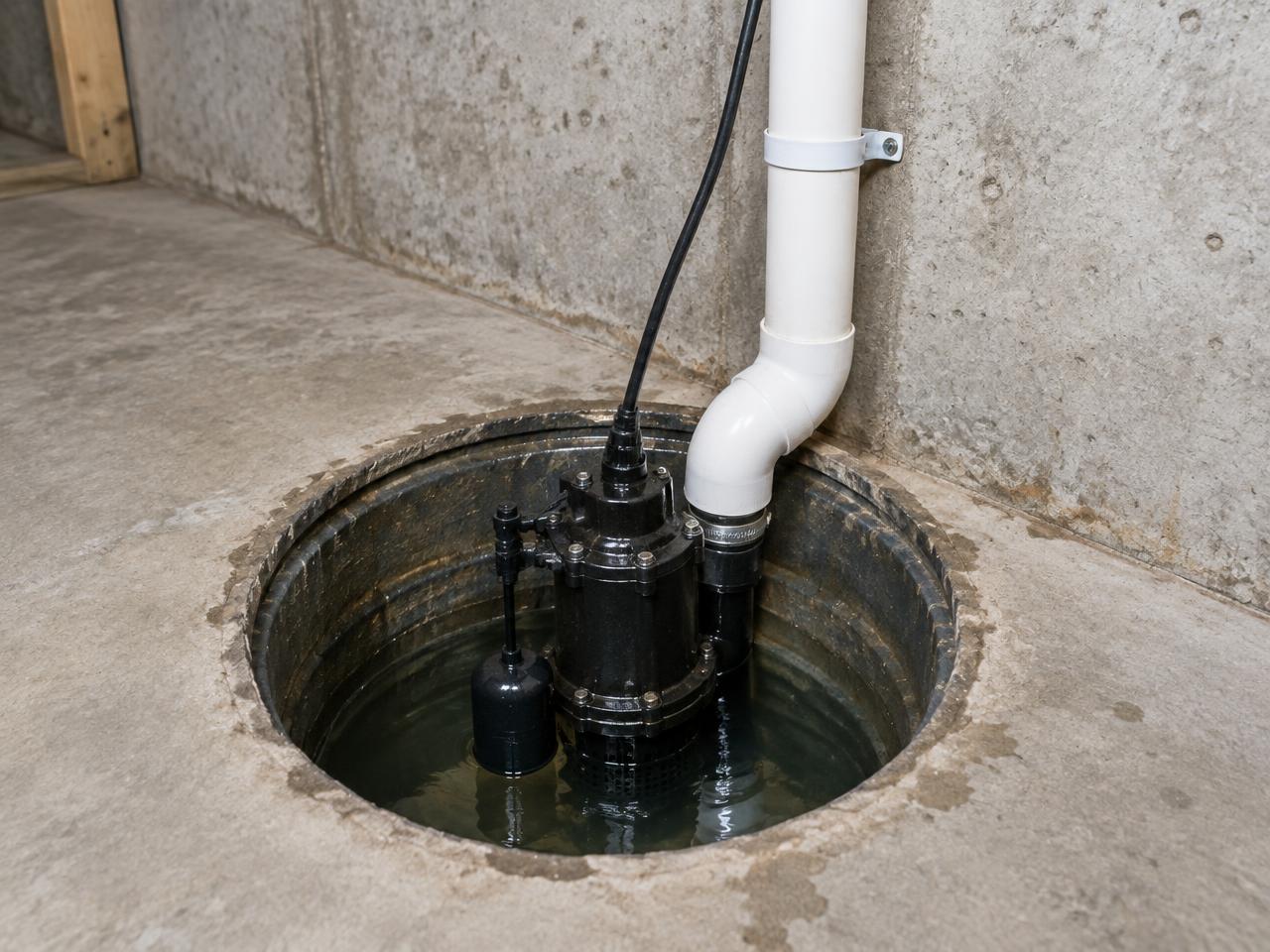
Get a Free EstimateA sump pump system has four parts. The pit is a lined basin set into the basement floor at the low point, where the drainage lines terminate. The primary pump sits in the pit and switches on by float when the water reaches a set level. The discharge pipe carries that water up and out through the wall, with a check valve so it cannot fall back into the pit. And a battery backup pump, where installed, takes over when power is lost.
It is the active half of a waterproofing system. Interior channels and tile drains only collect and route water to the pit, and once it is there, gravity has nothing left to offer on a flat lot. The pump is what lifts it out and discharges it far enough from the foundation that it does not simply drain back down along the wall.
Battery backup is not an upgrade we push for the sake of it. Heavy storms are exactly when a basement takes on the most water and also when power is most likely to fail, so a pump on house current alone is offline at the worst possible moment. A backup unit with a charged battery keeps pumping through an outage, and for many homeowners that single component is the difference between a dry basement and a flooded one.
An existing pump usually gives warning before it fails. Watch for a pump that runs constantly or cycles on and off rapidly, one that hums but does not move water, visible rust or grinding noise, a float that sticks, a pit that fills without the pump starting, or water on the floor around the pit. A pump more than about ten years old in a basement that gets regular water is living on borrowed time.
We size the pit and pump to the water volume the house actually produces rather than fitting a standard unit, run the discharge to a sensible point away from the foundation, and integrate the system with the interior drainage, tile drains, and dehumidification so the whole assembly works as one. Replacement of a failing pump in an existing pit is usually a same-visit job.
What Is Included
- Pit and pump sized to your home's actual water volume
- Sealed pit and check valve to prevent backflow and odor
- Battery backup options for storm power outages
- Discharge routed well away from the foundation
- Integrated with interior drainage and tile drain systems
Frequently Asked Questions
Warning signs include constant running, rapid on-off cycling, humming without moving water, grinding or rattling noise, visible rust, a stuck float, and water standing around the pit. Any pump over about ten years old in a wet basement should be inspected.
We strongly recommend one. The heaviest storms produce the most groundwater and are also the most likely to knock out power, and without backup the pump is dead exactly when it is needed most.
Out through the wall and away from the house, discharged far enough from the foundation that it does not soak back into the soil against your wall. Where code and site conditions allow, it can tie into a yard drain line running to daylight.
Get a Free Sump Pump Estimate
Call us at 573-418-1936 or request a free estimate and we will come out, assess your situation, and give you an honest answer.