Wall Anchor Foundation Repair in Kirksville, MO
A mechanical system that stops a bowing wall from moving and can pull it back toward plumb over time.
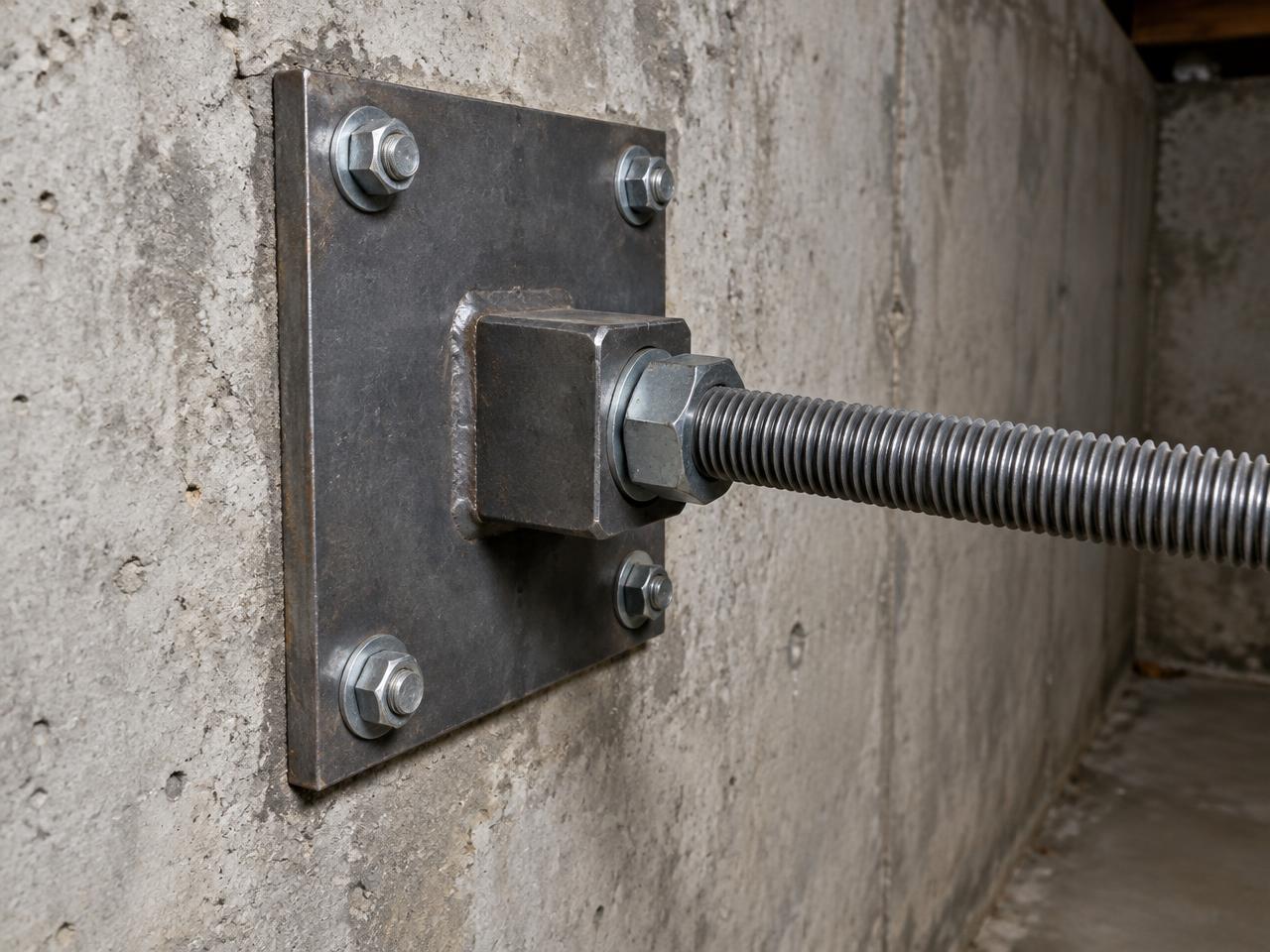
Get a Free EstimateA wall anchor system has three parts. A steel plate is mounted flat against the inside face of the foundation wall. A threaded steel rod runs from that plate out through the wall and horizontally through the soil. At the far end, in undisturbed soil well beyond the pressure zone against your foundation, a second anchor plate is set. Tightening the rod transfers the load off the wall and into stable ground.
That is what makes anchors different from a repair that simply reinforces the wall in place. Once the system is installed, the wall is held against the pressure that pushed it in. As the surrounding soil dries and stabilizes through the seasons, the rods can be tightened again in small increments, and a wall that has bowed or leaned inward can often be brought measurably back toward plumb rather than just frozen where it stopped.
Wall anchors are the right answer for the problems homeowners here describe most often: a block wall bowing inward at mid-height, a wall leaning in at the top, or horizontal cracking along a mortar joint caused by hydrostatic pressure and expansive clay. They are a durable, long-proven approach because they address the force acting on the wall rather than just the crack the force created.
In most homes the work is done from inside the basement. Small openings are made through the wall for the rods, and a compact excavation in the yard places the earth anchors. There is no need to dig out the full exterior of the foundation, which keeps disruption to your landscaping, driveway, and patio to a minimum, and keeps the job to a fraction of the cost of full excavation.
Foundation Restoration installs wall anchors as part of its SureFix Repairs solutions, using components chosen for the soil and freeze-thaw conditions specific to Northern Missouri and Southern Iowa.
What Is Included
- Prevents further wall movement
- Can be tightened over time as soil stabilizes
- No exterior excavation required in most cases
- Long-term structural solution
- Installed by experienced technicians
Frequently Asked Questions
Water-saturated soil presses on the outside of the wall with steady hydrostatic pressure. Expansive clay soils add to that by swelling when wet, and frozen soil expands against the wall through winter. Block walls give way along a mortar joint first, which is why bowing so often appears with a horizontal crack.
Most residential wall anchor installations are completed in one to two days depending on the length of wall being stabilized and the number of anchors required. We confirm the schedule with you before work begins.
Anchors stop the movement that opened the crack, which is the necessary first step. The crack itself is then sealed or injected so it cannot admit water. We usually recommend handling both in the same visit.
Get a Free Wall Anchor Estimate
Call us at 573-418-1936 or request a free estimate and we will come out, assess your situation, and give you an honest answer.