
Tile Drain Systems in Kirksville, MO
Relieving water pressure at the footing before it can load your walls.
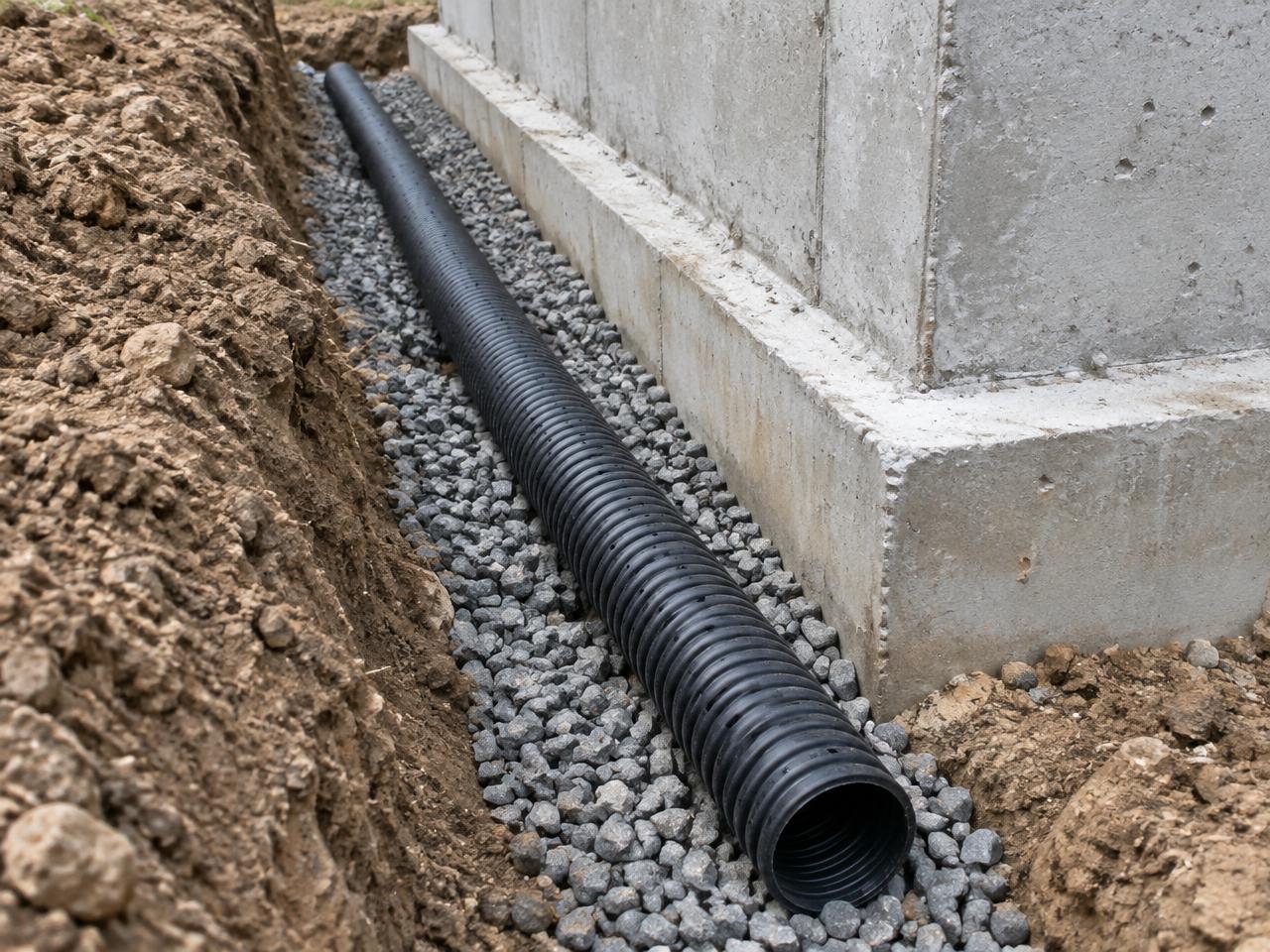
Get a Free EstimateA tile drain is a perforated pipe laid in a gravel trench at the base of the foundation, at or just below the level of the footing. Groundwater moving down through the soil reaches the gravel, enters the perforations, and is carried along the pipe to a discharge point rather than collecting against your foundation. The pipe is wrapped or bedded in filter fabric so soil cannot wash in and clog it.
The reason this matters is hydrostatic pressure. Water standing in saturated soil against a basement wall exerts a constant sideways force, and that force is what bows block walls inward, opens horizontal cracks, and pushes water through joints and hairline openings. A tile drain keeps the water table below the level where it can build that pressure, so the wall is never asked to hold it back.
Tile drains are installed in two positions. An exterior drain sits in the excavated trench alongside the footing during exterior waterproofing and is the first line of defense. An interior drain sits under the edge of the basement slab at the footing line, which is how we relieve pressure in homes where the exterior cannot be excavated. Many projects use both.
The drain has to go somewhere. Where the ground falls away from the house, we can often discharge to daylight by gravity, which needs no power and no maintenance. Where the lot is flat, the drain runs to a sump pit and the pump lifts the collected water and discharges it away from the foundation. The pipe is pitched consistently along its run so water keeps moving instead of standing in low spots.
This is the component almost every other waterproofing measure depends on. Membranes, coatings, and interior channels all assume water has a route out at the footing. Without working drainage there, water simply finds the next weakest point, which is why we inspect existing tile, and its outlet, before recommending anything else.
What Is Included
- Relieves hydrostatic pressure at the footing
- Interior and exterior installation options
- Gravity discharge or sump connection depending on your lot
- Filter fabric and clean gravel to prevent clogging
- Consistent pitch so water keeps moving
Frequently Asked Questions
Common signs are water appearing at the wall and floor joint after rain, a sump that no longer receives water during storms even though the basement is wet, and soil or mineral buildup visible at the discharge. Older clay tile and unwrapped pipe are especially prone to silting in.
Yes. Interior drain tile is installed from inside the basement along the footing under the slab edge, which avoids exterior excavation entirely. A narrow band of floor is opened and patched flush when the pipe is in.
Only if gravity cannot do the work. If the ground slopes away from your house, the drain can discharge to daylight with no pump at all. On flat lots the drain terminates in a sump pit and the pump moves the water out.
Get a Free Tile Drain Estimate
Call us at 573-418-1936 or request a free estimate and we will come out, assess your situation, and give you an honest answer.