
Drainage Flow Assessment in Kirksville, MO
Following the water across your property, from the roof to wherever it ends up.
Get a Free EstimateA drainage flow assessment traces the path water takes across your property during and after rain. Where it enters the site, which direction it travels, where it slows down and collects, and how long it takes to disappear. It is a different question from grading: grading tells us what the ground should do, flow tells us what the water is actually doing.
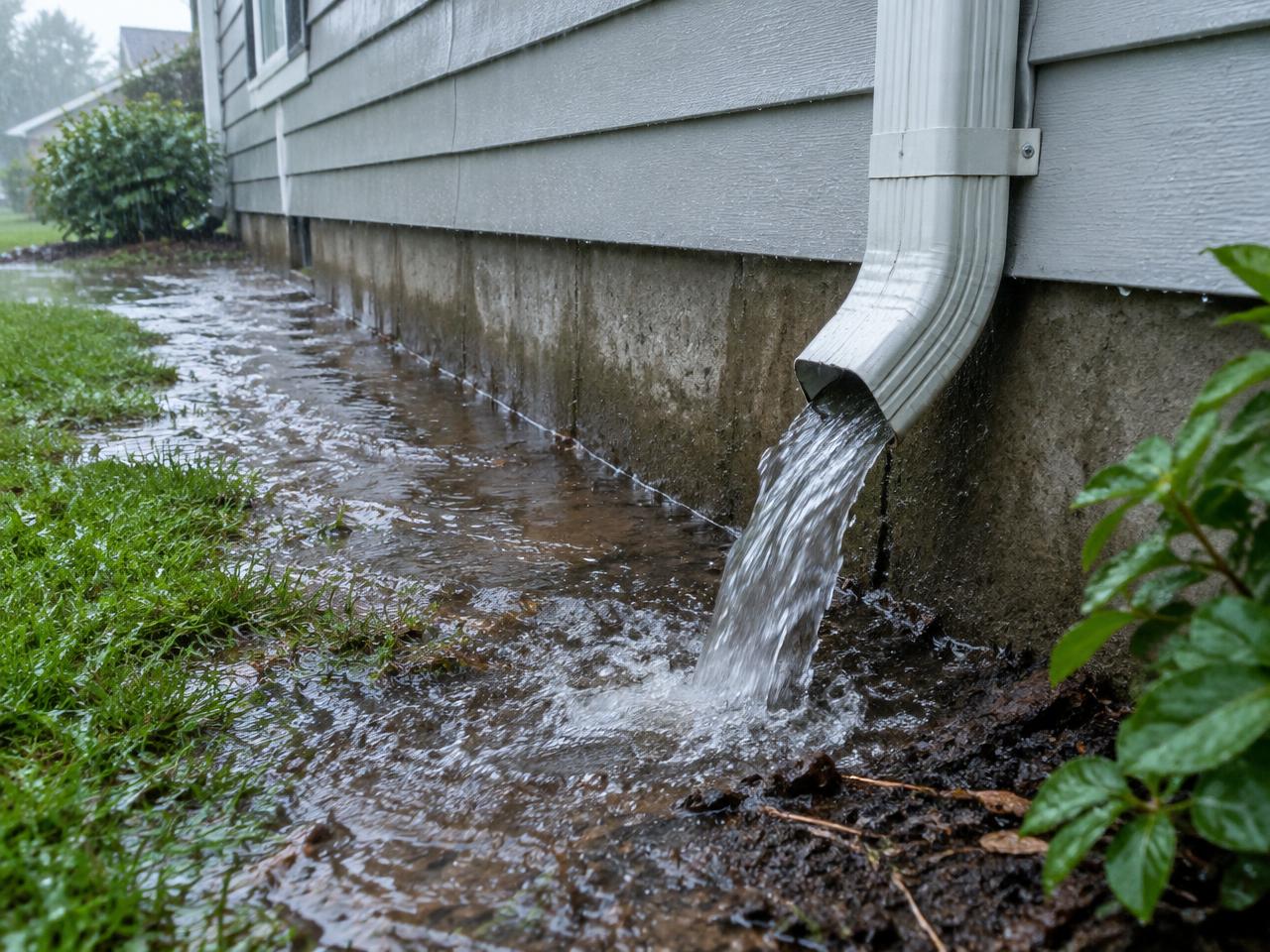
Roof water is usually the largest single source, and the most commonly mishandled. A roof concentrates an enormous volume into a handful of downspouts, and where those discharge within a few feet of the wall they saturate one small area of soil repeatedly, storm after storm. We check every downspout, where it discharges, whether extensions or buried lines exist, and whether those lines are still flowing or have silted shut.
Then we look at what happens at ground level: low areas that hold water, the paths runoff cuts across the lawn, hard surfaces like driveways, patios, and walks that shed water toward the house instead of away, window wells that collect and hold it, and runoff arriving from a neighboring property or a street higher than yours. The evidence is usually visible after the fact in erosion channels, silt deposits, washed-out mulch, moss on the foundation, and grass that stays saturated for days.
In Northern Missouri and Southern Iowa a few problems come up again and again. Downspouts dumping at the foundation. Buried discharge lines that plugged years ago and now back up at the house. Backfill that settled along the foundation and created a trench running the length of the wall. Heavy clay soils that shed water slowly and stay saturated long after a storm. Flat lots where water has no gravity route away. And window wells without drainage, holding water directly against a basement window.
The findings turn into a specific plan: which downspouts to extend or pipe away and where to discharge them, which low areas to fill and regrade, where a French drain or surface drain would intercept runoff before it reaches the house, and which hard surfaces or window wells need correction. We tell you which items matter most, and we can do the work.
What Is Included
- Traces actual water movement, not just ground slope
- Full review of downspout discharge and buried drain lines
- Identifies pooling areas, runoff paths, and erosion evidence
- Checks hard surfaces, window wells, and offsite runoff
- Prioritized drainage recommendations we can carry out
Frequently Asked Questions
As a rule of thumb, at least 6 to 10 feet from the foundation, onto ground that slopes away. Where that is not practical, a buried line can carry roof water further out to a discharge point or a yard drain.
It helps, and we will work with rain when the timing lines up, but it is not required. Water leaves clear evidence in erosion lines, silt, washed mulch, and staining, and combined with elevation readings that tells us reliably where it goes.
It is a gravel-filled trench with perforated pipe that intercepts water moving through the ground or across the surface and carries it away. It is the right tool when runoff arrives from a higher area or a slope and grading alone cannot redirect it.
Schedule a Drainage Assessment
Call us at 573-418-1936 or request a free estimate and we will come out, assess your situation, and give you an honest answer.