Vapor Barriers in Kirksville, MO
Cutting off the moisture that rises as vapor instead of running as water.
Get a Free EstimateNot all basement moisture arrives as water you can see. Damp soil continuously releases moisture as vapor, and that vapor passes straight through bare concrete, block, and exposed crawl space dirt. A vapor barrier is a sealed sheet that blocks the path, so the moisture stays in the ground instead of entering the air inside your home.
The symptoms are familiar: a persistent musty smell, clammy air, condensation on walls and cold pipes, mildew on stored boxes and furniture, rust on tools and mechanical equipment, and efflorescence, the chalky white mineral bloom left on block when moisture moves through it. None of that requires a drop of standing water.
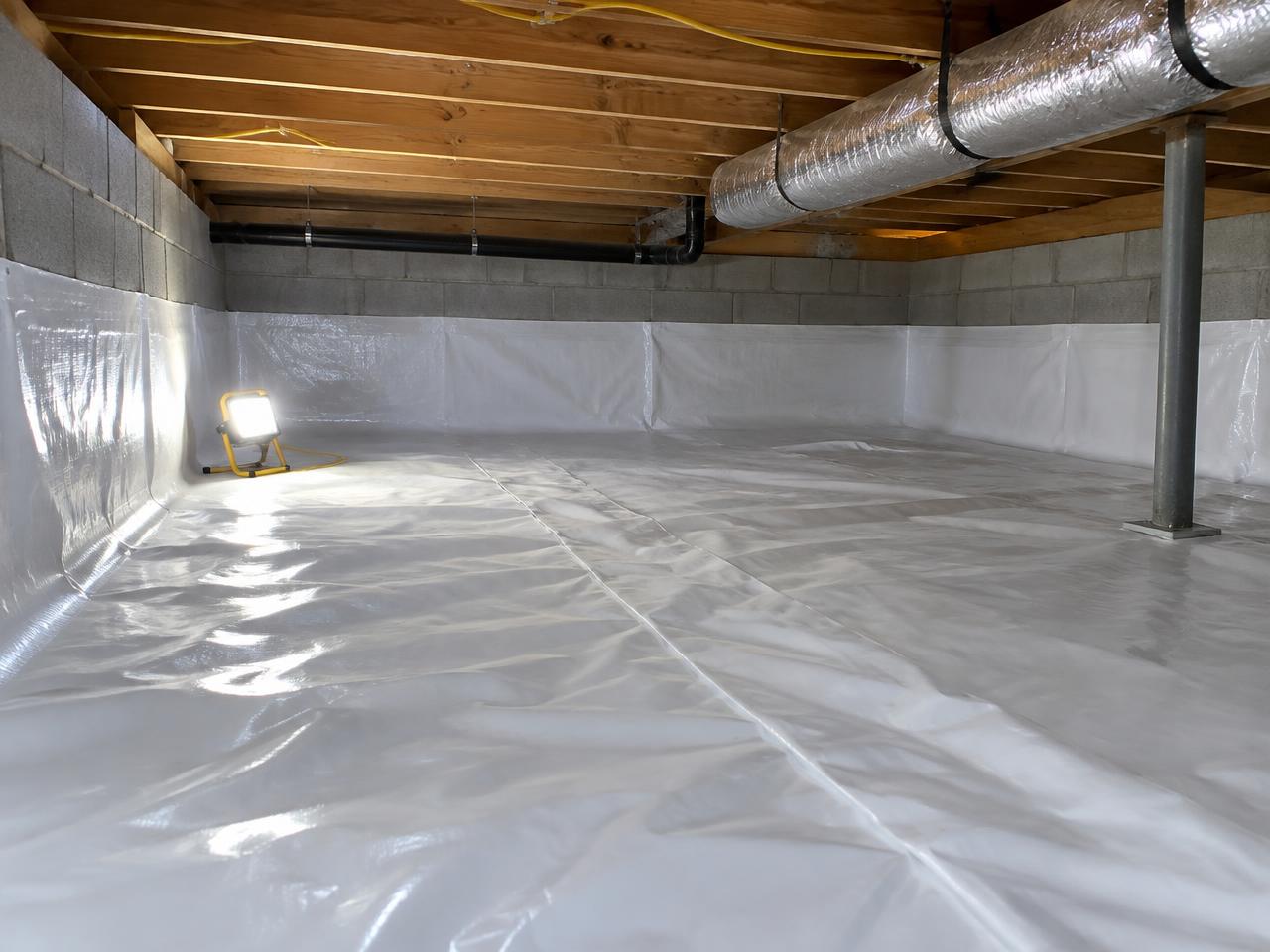
In crawl spaces the barrier is the single highest-value improvement available. Heavy sheeting is laid across the entire ground surface, overlapped and seam-sealed, run up the foundation walls and fastened, and sealed around piers and penetrations. Because air moves from the crawl space up into the living space, drying that ground plane improves the air in the whole house, not just the space below it.
In basements the barrier goes against the wall, and it is essential before finishing. Framing, insulation, and drywall installed over a bare foundation wall will absorb whatever vapor comes through and hold it out of sight, which is how mold problems develop inside finished basement walls. The barrier belongs in place before any of that is built.
Vapor barriers complete a moisture plan rather than replace one. Liquid water needs drainage and waterproofing, the barrier stops vapor transmission, and a dehumidifier controls what humidity remains in the air. We install them together so each part handles the problem it is actually suited to.
What Is Included
- Blocks ground moisture vapor at the source
- Eliminates musty odor and clammy basement air
- Sealed seams, wall runs, and penetration details
- Protects framing, insulation, and stored belongings
- Essential preparation before finishing a basement
Frequently Asked Questions
Very possibly. A basement with no visible water can still take on significant moisture as vapor through the walls and floor. Musty odor, condensation, or white mineral deposits on block are the usual signs.
Yes. Covering only the ground leaves the block walls free to pass moisture. We run the sheeting up the walls and fasten and seal it so the crawl space is enclosed as one system.
You should. Finishing over a bare foundation wall traps moisture behind insulation and drywall where you cannot see it. The barrier needs to go in before framing begins.
Get a Free Vapor Barrier Estimate
Call us at 573-418-1936 or request a free estimate and we will come out, assess your situation, and give you an honest answer.